The services
What we do,what each one is, and when you'd need it.
Numbered in the order the work happens in a tree — the assessment first, the ground work last.
 01
01Tree risk assessment
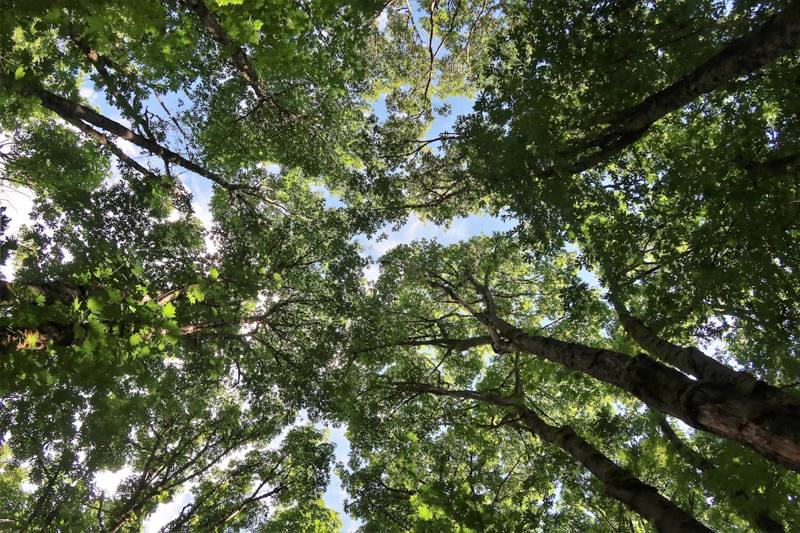
The visit when you are not sure what you are looking at. He reads the whole tree — the roots, the trunk, the canopy — and tells you plainly what it is likely to do and what your options are. If the honest answer is that the tree can stay, that is the answer you get.
- Mushrooms at the base, bark falling away, or a hollow you can see into.
- A crack you can see, or a limb that dropped without wind.
- The read you can act on — keep the tree with confidence, or take it down knowing why.
A tree can look green and still be failing at the roots — the top is the last to know.
- The root zone — heave, decay, ground that has moved.
- The trunk — cracks and seams, and how deep they run.
- The crown’s balance — how the weight sits over the trunk.
- What’s in reach if it comes down — people, roofs, the dog’s run.
- Is one bad sign enough to decide? No — the sign that worried you starts the read; it does not settle it.
- Will you tell me to take it down? Only when the read says so — when a tree can stay, saying so IS the job.
 02
02Pruning and crown work
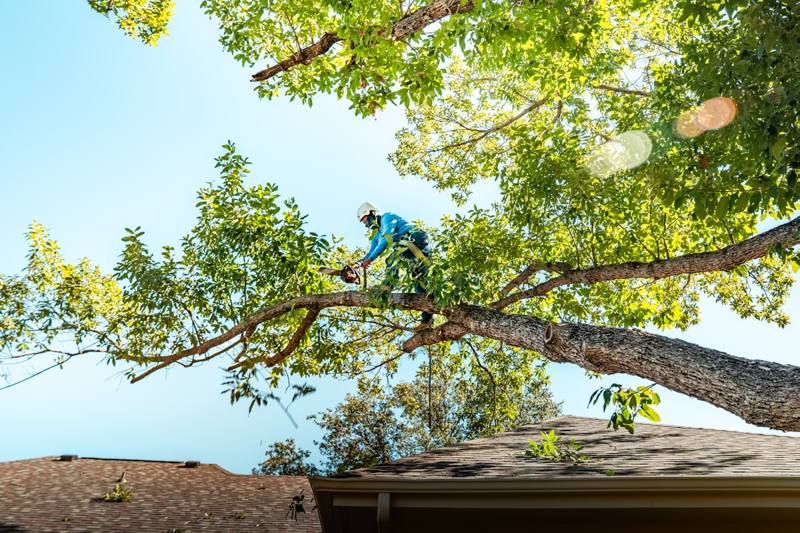
Weight out of an overgrown crown, dead wood down before it comes down on its own, clearance back from roofs and drives. Cuts go to the branch collar so the tree can close over them — the difference between pruning and topping, and the reason the tree stays healthy afterwards.
- Branches touching the roof, or shading the whole yard.
- Dead wood can drop without warning, even on calm days.
- Limbs crossing and rubbing, or storm-broken stubs left hanging.
- A lighter touch on older trees — mature canopies are trimmed, not stripped.
Every cut is a wound the tree has to close — fewer, better cuts beat many small ones.
- Where the dead wood sits, and what it hangs over.
- The branch collar at every cut — the tree’s own closing line.
- Crossing limbs that rub — the wound before the break.
- How much the canopy can spare — older trees carry less.
- When is the best time to prune? Late winter for most trees — wounds close fastest, and pests are still asleep.
- Can you just take the top out? Topping leaves wounds a tree struggles to close. Thinning at the right joints does the job without the harm.
 03
03Storm damage response
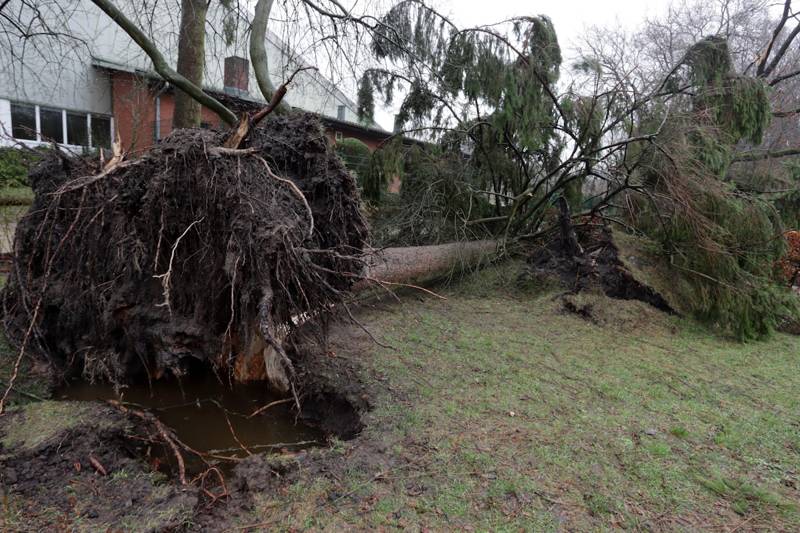
When a tree is down across a drive or leaning on a roof, the first job is to make it safe and get it off. Then the hangers and broken stubs still overhead, so the next wind does not finish what the last one started.
- A limb down across anything you need to use — drive, walk, or roof.
- Hangers — broken limbs still caught overhead — after the wind.
- A straight read on what has to come down now and what can wait — not everything storm-bent is lost.
After a storm, the damage you can see is rarely all of it — a cracked limb can hang together for days before it lets go.
- What’s resting on something — and what’s holding it up.
- Cracks that haven’t let go yet — the ones you can’t see from the ground.
- What’s leaning where it didn’t lean before.
- What should I do first? Keep everyone away from it — then describe it, and we’ll read it with you.
- Will the tree survive the damage? Trees seal wounds rather than heal them — a sound tree walls off the damage and keeps going. The wound’s size and place decide it.
 04
04Tree removal
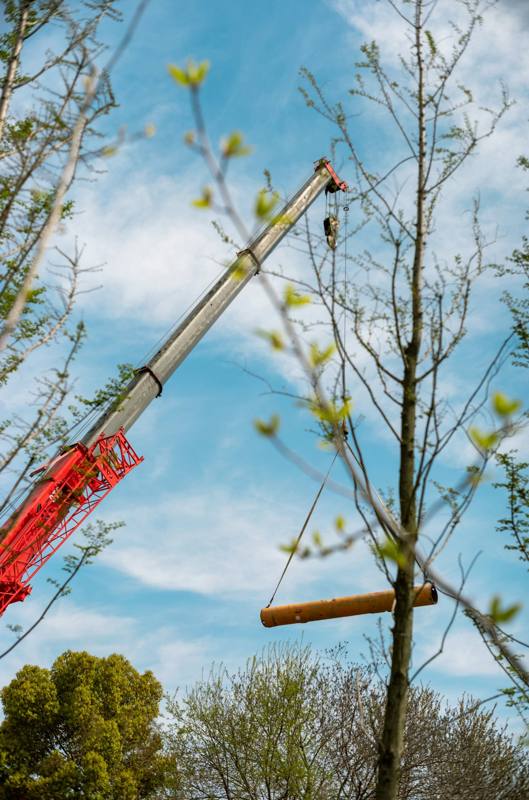
A tree standing in a yard rarely has room to fall. It comes down in pieces instead, rigged and lowered past the house, the fence, and the garden. The brush is chipped, the wood is cut and stacked or hauled away, and the stump can go to the grinder after.
- Dead limbs over where people walk or park.
- A lean that was not there last year.
- An honest read on whether it needs to come down — including when the answer is that it can stay.
A tree does not have to be dead to be dangerous — and a dead tree is not always dangerous. The read is tree by tree.
- The lean, and what it leans toward.
- The base of the trunk — sound wood or a hollow read.
- The soil plate at the roots — a lifted plate is a tree already moving.
- The lowering path — what stands between the tree and the ground it comes to.
- Does a dangerous-looking tree have to come down? Not always. Looks alone don’t decide it — plenty of worrying trees are sound, and a sound tree can stay.
- What happens to the stump? It can go to the grinder after — that is a separate piece of work.
 05
05Stump grinding
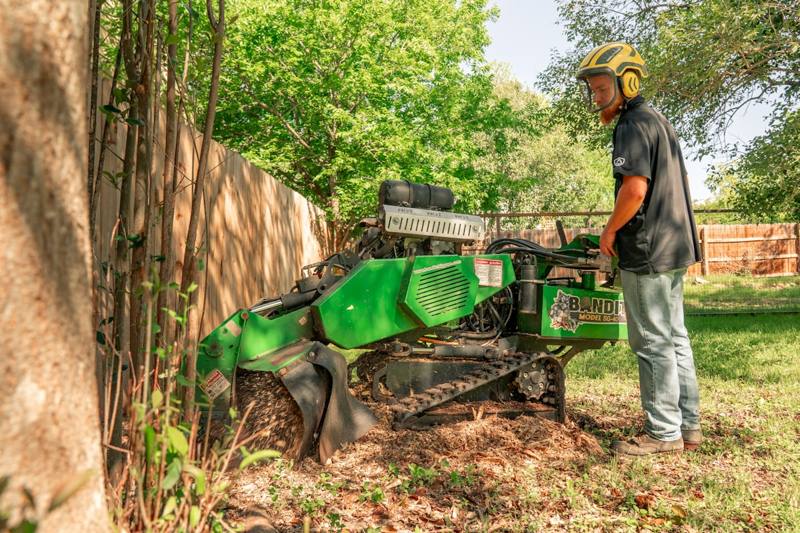
After the tree is down, the stump and its surface roots are ground out below grade, so the spot stops being a trip hazard and starts being lawn again. The grindings stay behind as mulch or leave with the cleanup.
- A stump you mow around, trip on, or want gone before regrading.
- Surface roots that buckle the walk or catch the mower.
- Ground below grade, not just flush with it — you mow over the spot, not around it.
A stump left behind can sprout for years — grinding stops the cycle at the root.
- The stump’s width — and how deep the roots run under it.
- What’s close: the walk, the drive, the bed lines — the grind’s edge.
- What you’re planting next — the grindings’ fate rides on it.
- Can you grind close to the walk? The grind follows the roots to their ends — the edge is read on site.
 06
06Brush removal
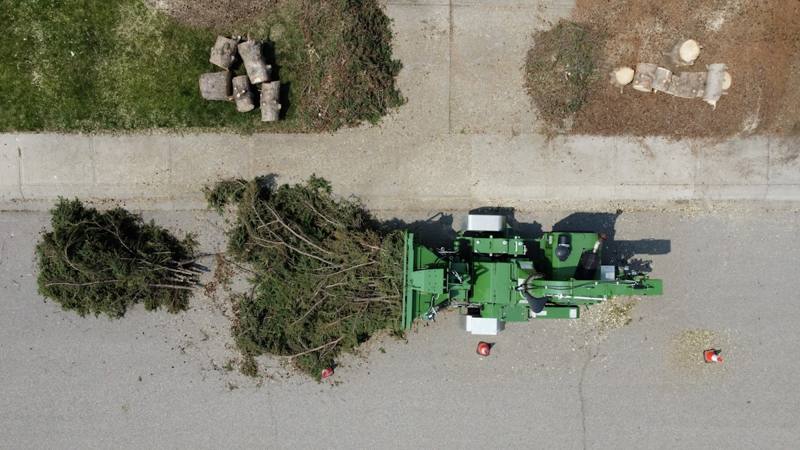
The pile at the edge of the yard, the limbs from a weekend of cutting, the overgrowth coming over the back fence. Chipped on site or loaded out — either way, it leaves.
- The pile at the edge of the yard that did not haul itself.
- Brambles and wild rose swallowing the fence line.
- No trailer, no burn pile, no transfer-station runs — the pile just leaves.
Brush piles left through a season become habitat — great for wildlife, less great beside a house.
- The pile’s size and what it’s made of — limbs, brambles, or both.
- Access — can the chipper reach it, or does it move to the road.
- What’s tangled in it — wire, stone, the hidden junk a chipper hates.
- Do I have to cut it first? No — standing brambles and overgrowth come down as part of the job.
- How big a pile is too big? Size is rarely the problem — access decides it.
 07
07Other tree work
If it involves a tree and it is not on this list, ask. You will get a straight answer — including when the honest answer is that the job needs something other than one man and his climbing kit.
- Your job involves a tree, and it is not on this list.
- A straight answer either way — and a point in the right direction when the job is not ours.
- What the job actually involves — the tree, the access, the risk.